
Independent guide for Douglas and Elbert County yards
Parker, Colorado Landscaping Guide
Clay that swells, hail in June, a hard freeze by October and a water bill that keeps climbing. Here is how yards in Parker and the towns around it are planned, watered, built and planted, plus a simple way to send a project inquiry.
- Parker
- Castle Rock
- Lone Tree
- Highlands Ranch
- Elizabeth
- Franktown
Ground truth
Landscaping at six thousand feet
Parker sits close to 6,000 feet on the plains just east of the foothills. That one fact explains most of what goes right and wrong in local yards.
The air is dry, the sun is strong and the wind dries soil faster than most plant tags assume. Nights cool off hard even in summer. The growing season is short, with frost possible into May and again by early fall. Under the topsoil, a lot of lots have dense clay, and in parts of Douglas County that clay is expansive enough to move slabs and crack walls when it gets wet.
None of that makes a good yard hard. It just rewards a different order of operations: grade and drain first, design the irrigation around how each area is used, pick plants for the site rather than the catalog, and build stone work on a base that expects the ground to move. The guides below walk through each piece, starting with water-wise xeriscape design and irrigation that survives the winter.
The guides
Pick the part of the yard you are working on
Hover or tap a panel to open it. Each guide is written for local soil, weather and rules, and links to the others where the work overlaps.
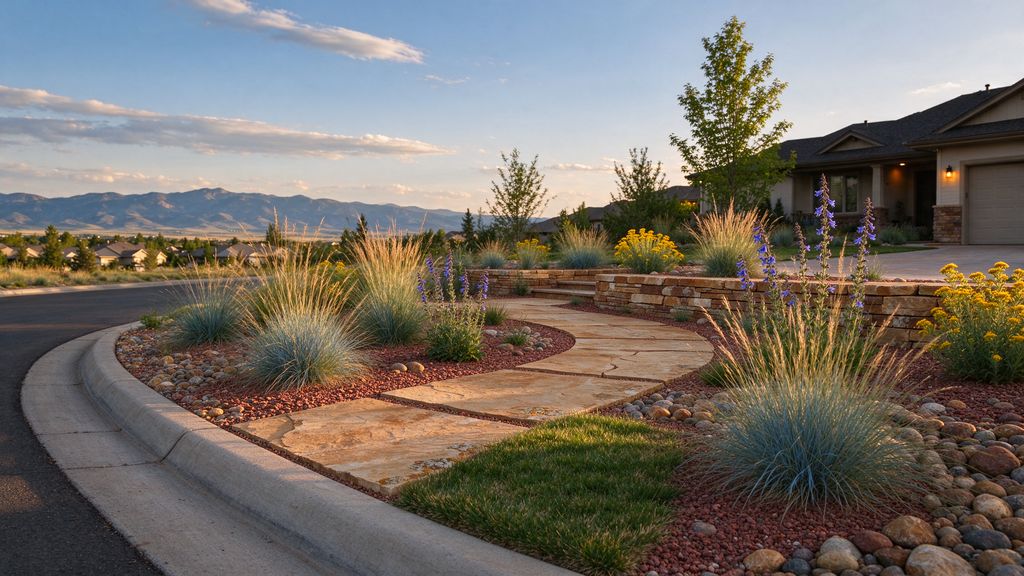
Xeriscape design
Water-wise yards built for clay soil, wind and a short season.
Open the xeriscape design guide
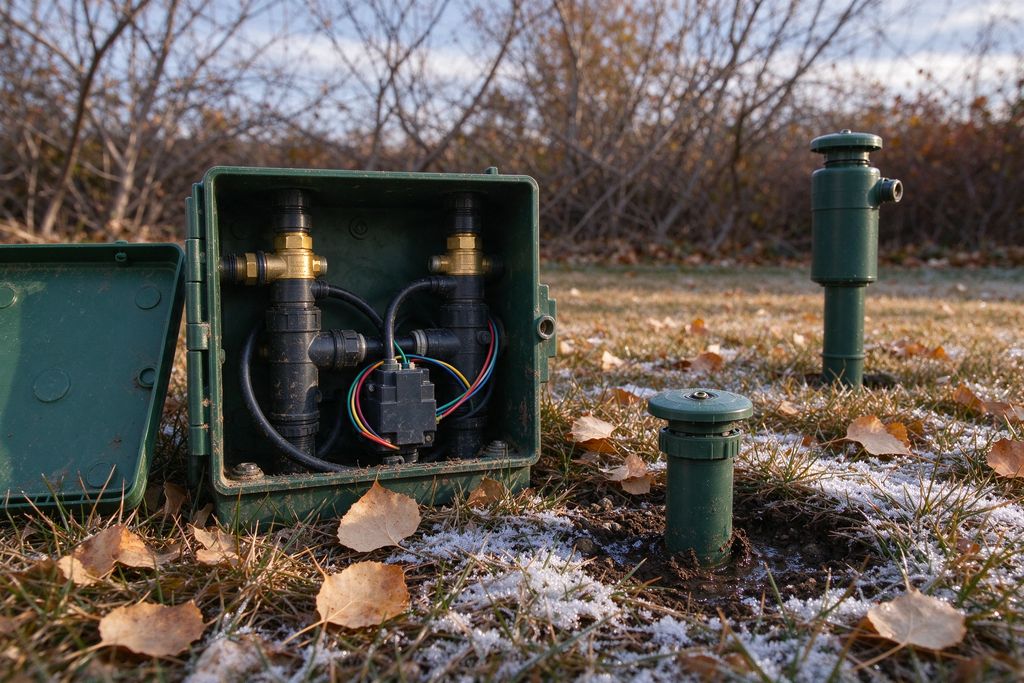
Irrigation and blowouts
Zoning, drip, controllers and winterizing before the hard freeze.
Open the irrigation and blowouts guide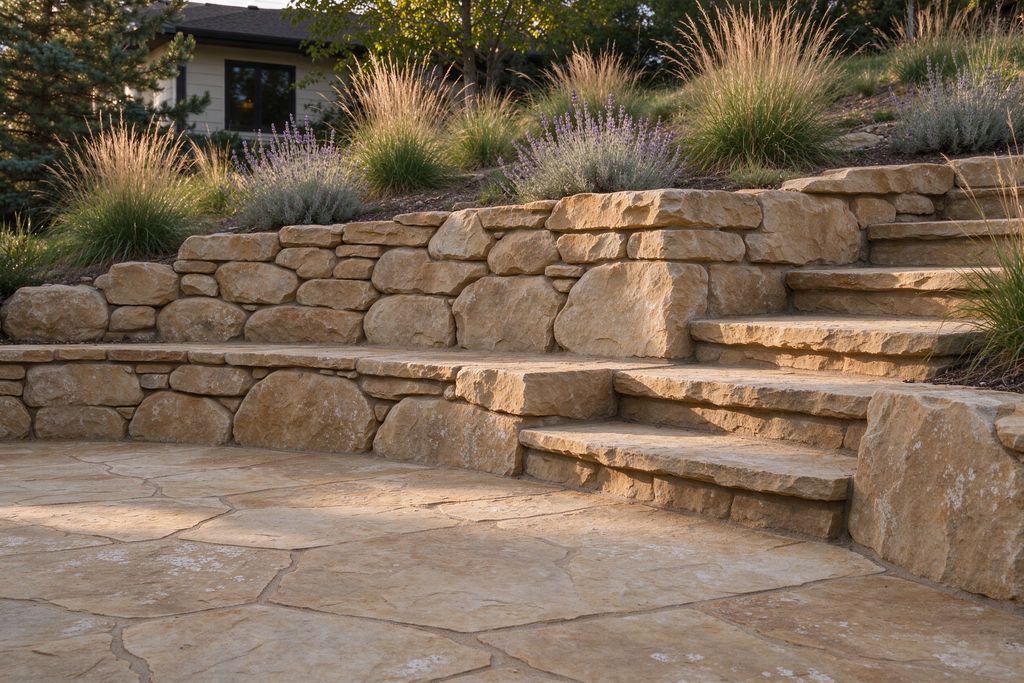
Patios, walls and pavers
Base prep, drainage and frost movement on expansive clay.
Open the patios, walls and pavers guide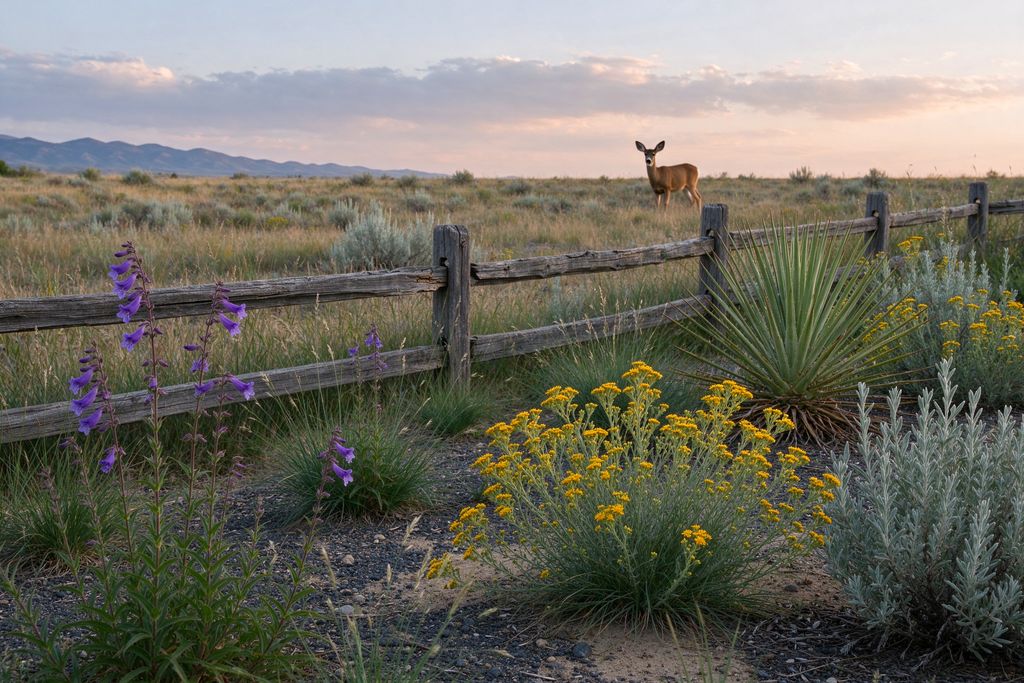
Native and deer-resistant plants
Plants that handle high-plains sun, wind and browsing.
Open the native and deer-resistant plants guide
Hail and freeze planning
Designing for June hail, wet fall snow and spring cold snaps.
Open the hail and freeze planning guideHiring someone? Start with how to choose a landscaper in Parker, which also covers HOA approval and watering rules.
Three things that shape every Parker yard: soil that is mostly clay, water that is rationed, and stone that moves with the frost.
A year in a Parker yard
Six seasons, not four
Front Range weather runs on its own calendar. Dates shift every year, so treat these as typical windows, not rules.
-
Thaw.
March and April bring warm afternoons and snow between them. Clean up, cut back grasses, and stay off saturated clay so you do not compact it.
-
Plant.
After the frost risk drops, often around mid-May, perennials, shrubs and sod go in. Start the sprinkler system once nights stay above freezing.
-
Hail.
Late spring and summer storms can shred leaves in minutes. Fine-textured plants and grasses bounce back faster than broad-leaf ones.
-
Seed.
Late summer into early fall is the classic window for cool-season grass seed: warm soil, cooler nights, fewer weeds competing.
-
Blow out.
Before the first hard freeze, irrigation lines are cleared with compressed air so trapped water cannot split pipes, valves or the backflow device.
-
Water.
Dry, sunny winters stress trees and new plantings. On mild days with unfrozen ground, a deep drink by hose helps them through.
Yard planner
What should cover the ground?
Five quick questions about one area of your yard. The suggestion updates as you answer. It is a starting point for planning, not a site assessment.
Suggested direction
A full xeriscape redesign
Your answers will shape this suggestion.
Read the xeriscape design guide
Your answers stay in your browser. Nothing is sent unless you choose to send an inquiry.
Describe this area in an inquiryHow projects usually run
From idea to established yard
The order matters more than the budget. Skipping a step early is what makes the later ones expensive.
- 01
Read the site
Watch where water goes in a storm, where snow lingers, which areas bake in afternoon sun and where the wind comes from. Note slopes toward the house.
- 02
Check the rules
Pull your HOA design guidelines, find out who your water provider is and what it allows, and ask the town or county whether walls, grading or fences need a permit.
- 03
Draw the plan
Sketch use areas first: play, paths, seating, planting, utilities. Then group plants by water need so each irrigation zone serves one kind of planting.
- 04
Call before digging
Colorado 811 marks buried utility lines before excavation. A contractor should request the locate; if you dig yourself, you make the request.
- 05
Grade and drain
Shape the ground so water moves away from the foundation and off hard surfaces. This is the cheapest moment to fix drainage, and the hardest to redo later.
- 06
Build, then irrigate
Hardscape and wall bases go in before sprinkler and drip lines, so equipment does not crush pipe. Sleeves under paths save digging later.
- 07
Plant and establish
New plants need steady water for their first seasons, then gradually less. Mulch, check the controller monthly and adjust as plants root in.
Six towns, one region
Same weather, different rules
The climate barely changes between these towns. Who supplies the water, who reviews the design and how big the lots run can change a lot.
| Town | What tends to shape projects | Check first |
|---|---|---|
| Parker | Mostly covenant-controlled neighborhoods on clay, with open space and wildlife corridors along Cherry Creek. | Your HOA guidelines and your water provider's current watering schedule. |
| Castle Rock | Hillier lots, more slope and rock, and a town-run water utility with its own outdoor watering program. | Town water rules and whether a planned wall or grading change needs review. |
| Lone Tree | Smaller, denser lots where hardscape, privacy and tidy low-water beds usually lead the design. | HOA or metro district standards and which district supplies your water. |
| Highlands Ranch | A large planned community with a community association that reviews exterior and landscape changes. | The community association's design review process before booking work. |
| Elizabeth | Bigger lots, steady wind and more open ground, where windbreaks and native grasses do heavy lifting. | Town or Elbert County rules, and your well permit or water source. |
| Franktown | Rural acreage in unincorporated Douglas County, often with private wells and pine-edged pasture. | Your well permit, since some permits limit or bar outdoor irrigation. |
Water providers, district boundaries and rules change. Use this table to know which questions to ask, then confirm the current answer with your provider, HOA or building department.
Common questions
Parker landscaping questions
When is the best time to start a landscaping project in Parker?
Design and HOA paperwork fit well in winter. Hardscape and grading can run whenever the ground is workable and not frozen or soaked. Most planting goes in after the spring frost risk drops, usually around mid-May, and cool-season grass seed does best in late summer. Irrigation work is easiest before the system is charged in spring or after the fall blowout.
Do I need HOA approval before changing my yard?
If you live in a covenant-controlled community, usually yes. Most HOAs ask for a design submission before work starts, especially for hardscape, grading, fences, tree removal and big changes to turf. Read your current design guidelines and submit before you book a crew, because an approval can take weeks.
Can I just tear out my lawn and put down rock?
You can, but a sea of rock gets hot, reflects heat into the house, and still grows weeds. A water-wise yard works better with planted beds, mulch, a properly zoned irrigation system and turf kept where it is actually used. Check your HOA rules and your water provider before removing turf, since some programs have conditions.
What are the local watering rules?
They depend on who supplies your water. Parker, Castle Rock, Highlands Ranch and Lone Tree are served by different providers and districts, and rules on watering days, hours and drought stages can change from year to year. Check with your water provider for the current schedule before you set the controller.
Is Landscaping Parker a landscaping company?
No. This is an independent information resource with a project inquiry form. It does not install, repair or design anything itself. For irrigation tie-ins, backflow testing, electrical work and engineered retaining walls, hire licensed and insured professionals and confirm local permit rules.
Why does my yard drain so badly?
Much of the Parker area sits on clay, and some of it is expansive clay that swells when wet and shrinks as it dries. Water moves through it slowly, so beds stay soggy and slopes shed water fast. Grading that carries water away from the foundation, careful irrigation and organic matter worked into planting areas all help.
No question matches that filter yet. Try a shorter word.
Ready when you are
Tell us about your yard
Share the town, the area you want to change and what is not working now. Photos can follow by email once you hear back. The more you describe slope, sun and how the space gets used, the more useful the reply.
Send a project inquiryIndependent guide, not a contractor. Use licensed, insured pros for irrigation tie-ins, backflow testing, electrical and engineered walls, and check local permit rules.