
The short answer
Sod is an instant surface that needs heavy watering for a few weeks. Seed is slower and cheaper in materials, but it needs the right season, steady moisture on the surface for weeks, and tolerance for a thin first year. In Parker, both live or die on soil preparation, because clay that has been compacted by construction equipment does not let roots or water in.
If you need the lawn usable soon, have a slope that would wash seed away, or are working in spring, sod usually wins. If you can wait for late summer, have a modest area and can water lightly several times a day, seed is a good option. If the area is sunny and lightly used, a native grass such as buffalograss or blue grama may beat both on water use.
Side by side
- Best timing
- Spring through early fall when the ground is workable.
- Usable
- Light use once rooted, often a few weeks.
- Watering
- Deep and frequent at first, then tapering as roots knit in.
- Watch for
- Gaps at seams drying out, and sod laid on hard, unprepared clay.
- Best timing
- Late summer into early fall for cool-season grass.
- Usable
- Usually the following spring for real use.
- Watering
- Light, several times a day to keep the surface moist until germination.
- Watch for
- Wind and storms washing seed, weeds, and patchy germination on slopes.
- Best timing
- Warm weather, late spring into early summer, when soil is warm.
- Usable
- Slow to establish; light use only.
- Watering
- Regular during establishment, then far less than bluegrass.
- Watch for
- Tan color outside summer, weed pressure while it fills in, shade.
Grass type matters as much as method. Most sod sold along the Front Range is Kentucky bluegrass or a bluegrass blend. Turf-type tall fescue is available as sod and seed and tends to root deeper and tolerate heat better. Fine fescues handle shade and lower water but not heavy traffic.
Soil prep on Parker clay
New construction lots often have a thin layer of topsoil, or none, over clay that has been driven on for months. Roots stay shallow in compacted clay, so the lawn needs more water and burns out quickly in July. Good prep looks the same for sod and seed:
- Remove debris, rocks and existing weeds. Kill perennial weeds before you start, not after.
- Check the grade. The surface should fall away from the house and drain toward planned outlets, not toward a neighbor's yard.
- Loosen the top several inches with a tiller or ripper and work in compost so the soil can take water.
- Rake smooth, then roll lightly so the bed is firm enough that footprints are shallow.
- Lay out or adjust irrigation so every part of the new lawn gets even coverage before the grass goes down.
Tilling and grading count as excavation. Request a utility locate through Colorado 811 before you or a contractor dig, even for a lawn.
Laying and watering sod
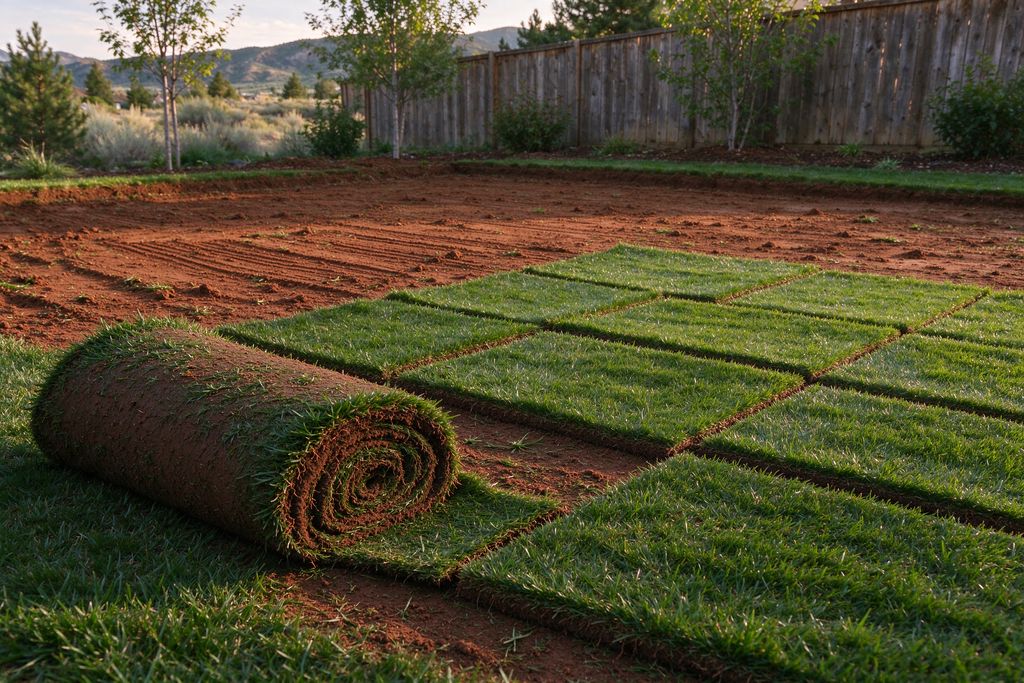
Sod should go down the day it arrives, because rolls heat up and dry out quickly when stacked. Stagger the seams like brickwork, butt edges tightly without stretching, and cut pieces to fit around curves rather than leaving gaps. On slopes, run the strips across the slope and stake them if needed.
Water immediately after laying, deeply enough that the soil underneath is wet, not just the sod. In the following weeks, water often enough that the sod never dries out, paying special attention to edges and seams next to concrete, which dry first. As the roots knit in, water less often and more deeply to push roots down.
Seeding and germination
Seed needs good contact with the soil. Spread it in two passes at right angles for even coverage, rake it in lightly so it sits just under the surface, and roll it. A thin layer of mulch or a seed blanket helps on slopes and in wind, both common around Parker.
Until germination, keep the top layer of soil consistently moist with short, frequent watering. Bluegrass is slow to germinate compared with fescue, so blends can look patchy at first. Once seedlings are up, shift gradually to longer, less frequent watering. Hold off on weed control products until the new grass is established, and read the label for how long to wait.
Watering rules and new lawns
Many water providers along the Front Range limit watering days or hours, and some have special allowances or permits for establishing new landscapes. Others restrict new turf during drought. Find out who supplies your water and check its current rules before you buy sod or seed, and check your HOA guidelines too, since many specify how much turf is allowed and where.
A new lawn is also the right moment to rethink how much lawn you need. The xeriscape design guide covers keeping turf where it earns its water, and the irrigation guide explains zoning so the lawn is not watered on the same schedule as your shrubs.