
Design starts with zones
An irrigation zone is a group of heads or emitters controlled by one valve. The single most useful design rule is that every zone should water one kind of planting in one kind of exposure. Turf in full sun, turf in shade, shrub beds and dryland perennials all need different amounts of water, so they belong on different valves. When a system mixes them, the controller has to water for the thirstiest plant on the zone and everything else gets too much.
Within a turf zone, heads should be matched: sprays with sprays, rotors with rotors, and nozzles chosen so the zone applies water evenly. Head-to-head coverage, where each head throws water to the next one, is the standard for even watering. Wind on open Parker lots distorts spray patterns, which is one reason rotary nozzles that throw heavier streams are popular here.
Drip for beds and trees
Shrubs, perennials and trees do better on drip or micro-irrigation, which puts water at the root zone with little lost to wind or evaporation. Drip zones need a filter and a pressure regulator, and emitters should be added as plants grow. Trees especially need water spread out toward the edge of their canopy over the years, not just at the trunk.
Watering clay without runoff
Clay accepts water slowly. Many spray heads apply water faster than clay can absorb it, so a single long cycle runs off the lawn and down the gutter while the soil underneath stays dry. The fix is cycle and soak: split each zone's run time into two or three shorter cycles separated by a wait, so the water from each cycle soaks in before the next one starts. Most modern controllers can do this automatically.
Push a long screwdriver into the lawn a day after watering. If it slides in easily for several inches, water is reaching the roots. If it stops after an inch, the soil is either dry below or compacted, and the schedule or the soil needs work.
Controllers, sensors and the rules
A weather-based or soil-moisture controller adjusts watering to actual conditions instead of running the same schedule from June to September. Look for EPA WaterSense labeled models, add a rain or freeze sensor, and enter real information for each zone: plant type, sun exposure, slope and soil. A smart controller set up with default values does little better than an old timer.
Local watering rules come from your water provider, not from the town in every case. Parker, Castle Rock, Highlands Ranch, Lone Tree and the surrounding districts each set their own schedules and drought stages, and they can change between seasons. Check with your provider for the current rules, then program the controller to follow them. Properties on private wells, common around Franktown and Elizabeth, should check what their well permit allows for outdoor watering.
The fall blowout, step by step
Water left in pipes, valves, heads and the backflow device expands when it freezes and splits whatever it is in. A blowout uses compressed air to push that water out of each zone. Here is what a careful service usually involves:
- Shut off the water supply to the irrigation system at its isolation valve, which is often in the basement or crawlspace.
- Connect the compressor at the designated blowout port or fitting downstream of the backflow device. Air should never be pushed backward through the backflow assembly.
- Run each zone in turn with the controller or manually, at moderate air pressure, until only mist comes from the heads. Repeat zones that sputter water.
- Never run air through a closed system with no zone open, and avoid overly long blasts on one zone, which heat and damage parts.
- Release the air, then open the backflow test cocks partway and drain any remaining water so the device is not left full.
- Set the controller to off or rain mode so it does not try to run zones through the winter.
Irrigation tie-ins to the household water line, backflow testing and controller wiring can involve plumbing and electrical rules. Use licensed, insured professionals where your water provider or town requires them, and keep the test reports.
Spring start-up
Charging the system too early is a common spring mistake. A late freeze can still damage a pressurized backflow device. Wait until overnight temperatures are reliably above freezing, then open the supply valve slowly so the pipes fill without a pressure spike. Close the backflow test cocks first, and check every zone for broken heads, tilted heads, leaks and spray hitting the house or the street.
This is also the time to adjust heads that have sunk below the grass, clean drip filters and check the controller clock and battery. Many backflow devices also need their annual test around start-up; your water provider can tell you whether that applies to you.
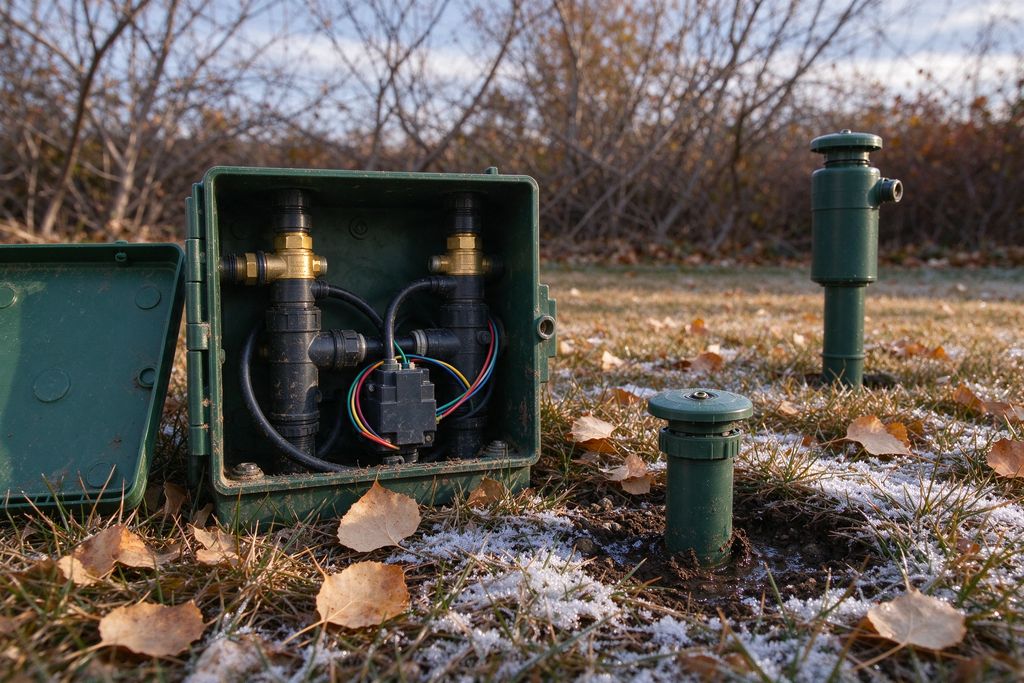
When to redesign instead of repair
If you are converting turf to xeriscape, adding a patio or changing beds, the irrigation should change at the same time. Cap or convert spray heads in areas that are becoming drip zones, move valves so they serve one hydrozone each, and run sleeves under new paths before the stone goes down. The xeriscape guide covers hydrozones, and the patio and retaining wall guide covers the order of work around hardscape.